
Purge lump solution
Purge Lump Recycling and Shredding Solution
Watch the HSS Small Shredder reduce thick, solid and irregular plastic purge lumps. Compare HSS-600 and HSS-400, then send a photo for a suitability assessment.
HSS-600 Small Shredder processing a thick, irregular purge-lump application example; this is not a maximum input-size or throughput specification.
HSS-400 Small Shredder processing plate-like purge material; this example does not define a maximum input size.


Front and side views of a real purge-lump application example.
What Are Plastic Purge Lumps?
Plastic purge lumps form when molten resin is discharged from injection-molding or extrusion equipment during a color or material change, start-up, shutdown or machine cleaning. The discharged plastic cools into a solid block, so it is often thick, solid and irregular rather than shaped like a normal production part.
You may also hear this waste called plastic purgings, purge cakes or purge waste. Start-up scrap is a broader term that can include purge material as well as other rejected material made while production is stabilizing. If your factory uses a different name, send a photo so we can assess the waste by its form.
- Color or material change
- Start-up or shutdown
- Machine cleaning or purging
Purge-lump processing
Why Are Purge Lumps Difficult to Process?
Purge lumps in the applications covered here can reach approximately 50–60 mm at the thickest point. A cutting machine must take its first bite into a solid, uneven block rather than a thin-walled rejected part.

Thick, solid cross-section
The cutting system must work through a thick, solid section of plastic.
Irregular size and shape
Uneven surfaces can make each lump sit and feed differently.
Difficult first bite
A conventional crusher may struggle to catch and cut the whole lump directly.
Higher cutting load
Direct crushing can increase power demand, blade wear and damage risk when the machine is not matched to the application.
The 50–60 mm thickness is a real application example, not a maximum HSS feed-size specification.
Customer-site evidence
Customer Case: HSS-600 Shredder Processing PC Purge Blocks
A customer needed a compact machine for impact-resistant PC purge blocks. After Hetian tested the material, an HSS-600 was supplied for the application.
- Customer-confirmed input
- PC purge lumps, approximately 10–20 mm thick. No pre-cutting — the purge lumps were fed in their original form.
- Hetian route
- Material test followed by an HSS-600 matched to the application.
- Customer-reported result
- After installation, the customer told Hetian they were satisfied with the material feeding and shredding speed and sent this operating video as feedback.
The customer identified the material and thickness; they are not determined from the video alone. This case reflects this customer's material and machine setup, not a measured throughput, maximum-thickness specification, or universal result.
Inside the machine
How the HSS Cutting System Handles Purge Lumps
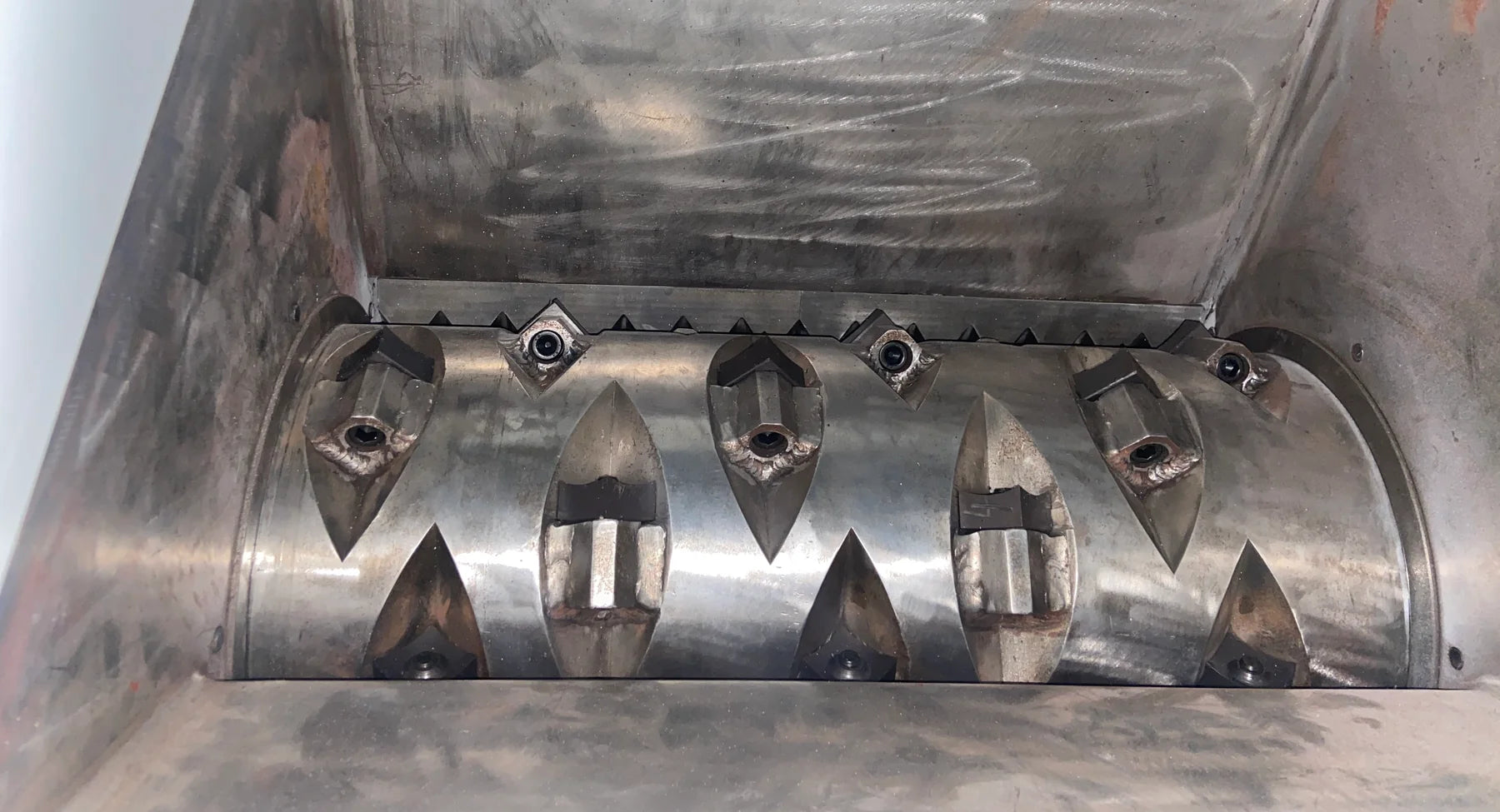
Inside the HSS-600 cutting chamber, rotating moving blades work against stationary fixed blades to take repeated cuts through thick, irregular purge blocks.
SKD11 moving blade
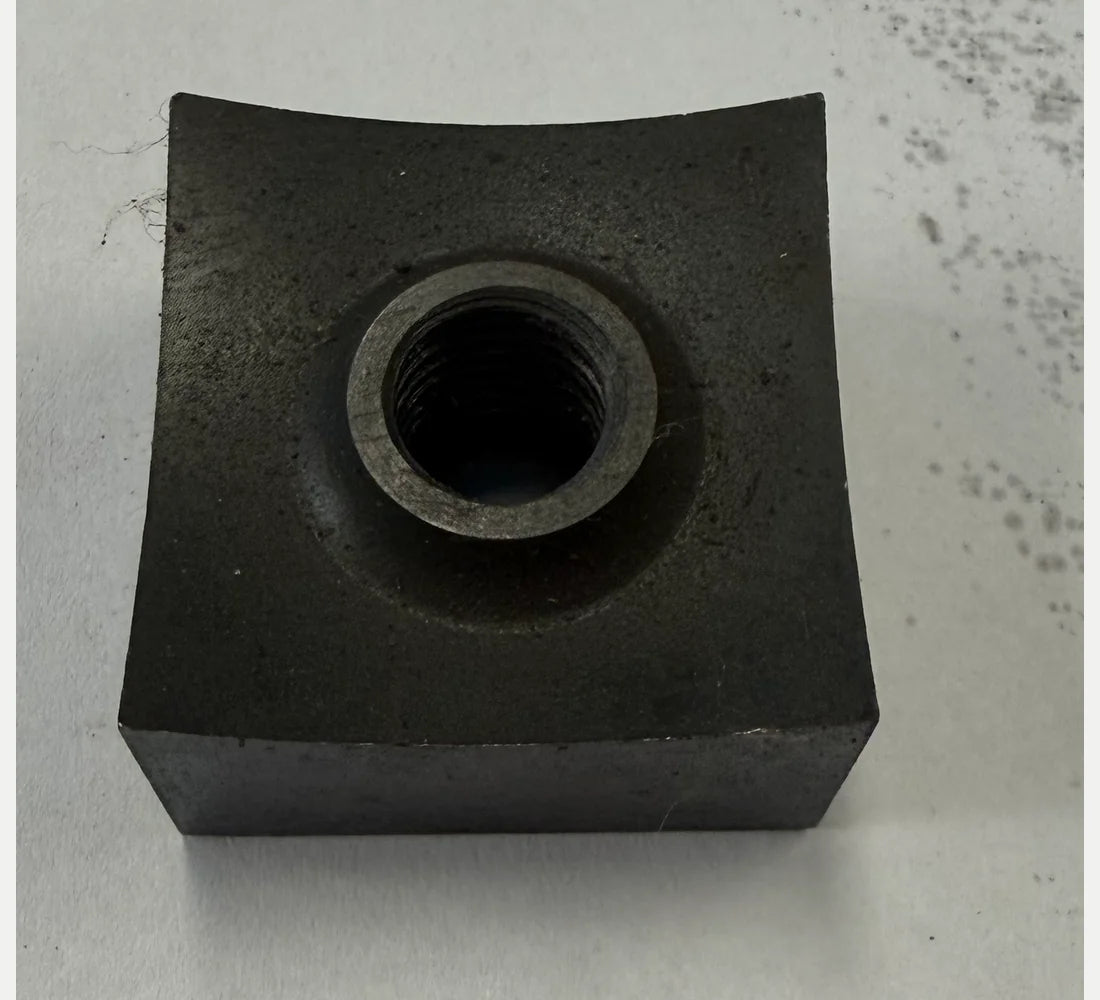
The photographed HSS moving blade is made from SKD11.
Four usable cutting edges
Each HSS blade has four usable cutting edges. It can be rotated and reinstalled to bring another edge into service.
Screen-selected particle size
A selected screen keeps larger pieces in the cutting chamber for further size reduction until they can pass the screen opening. Share the particle size you need so the screen can be matched to the configuration.
Three-Retry Protection
Automatic reverse, retry and stop protection helps limit damage if a hard block cannot be processed. It does not mean every hard block is suitable.
Compare HSS-400 and HSS-600
Choose a starting point based on lump thickness and production need.
| Model | Purge-lump starting point | Reference capacity* |
|---|---|---|
| HSS-400 | Smaller lumps and lower production needs. Larger or thicker lumps may be manually pre-cut before feeding when that labour trade-off is economical. | 200-300 kg/h |
| HSS-600 | Thicker lumps and higher production needs relative to HSS-400. Its larger inlet and higher power can reduce manual preparation and operator effort. | 250-400 kg/h |
* Reference capacity uses ordinary-strength, non-reinforced plastic from typical injection-molding applications. Reinforced or abrasive materials are outside this reference.